 +1 (561) 644-3311
 info@floodresponseassistance.com
A Post-Storm Flood System Maintenance Guide
The Atlantic hurricane season officially ends on November 30. For most of 2026, it looked like the season might end without really starting. June, July, August, and September all went by without a single hurricane.
Then came Isaias.
In early October, Isaias formed in the Gulf and became the first hurricane of the season within a day. It briefly reached major hurricane strength and made landfall near Destin, Florida, as a Category 2 storm. It brought storm surge, flash flooding, and power outages to hundreds of thousands of customers across Florida and Alabama. The whole thing took less than three days from first name to landfall.
If you’re on the Gulf Coast, you may still be cleaning up. If you’re not, Isaias is still worth noticing, because it’s a clear example of something that’s easy to forget: a quiet season is not a safe season. Protection doesn’t come from forecasts or calendar dates. It comes from a system that’s ready whenever the water shows up.
This guide covers what flood system maintenance looks like after hurricane season, why the off-season is the best time to do it, and a practical checklist you can hand to your facilities team this month.
Why the Off-Season is the Right Time for Flood System Maintenance
Flood system maintenance done in calm weather is cheaper, faster, and far less stressful than repairs done with a storm on the radar. Here’s why the weeks after hurricane season are the sweet spot.
- You can see what the season did – If your barriers went up for Isaias, or were tested, moved, or simply sat in storage through a long humid summer, they now carry the evidence: debris in the seals, scuffed panels, bent hardware. Inspect now, while the season is fresh in everyone’s memory, and you’ll catch issues while they’re still small.
- Parts and people are available – Isaias gave the Gulf Coast less than three days of warning. When a storm moves that fast, everyone wants replacement gaskets and service appointments at the same moment. In November and December, lead times are shorter and schedules have room.
- Budgets reset – Many organizations plan capital and maintenance budgets for the coming year in Q4. Flagging repairs or upgrades now gets them into next year’s plan instead of an emergency request in the middle of the next storm.
- Nothing is on fire – Or underwater. Your team can actually think, and decisions made in calm conditions are better decisions, full stop.
What Flood System Maintenance Actually Covers
A flood protection system is more than the barrier itself. It’s every component that has to work together, on short notice, when conditions are at their worst. A complete maintenance review looks at:
- Barriers and panels – Check for cracks, warping, dents, or corrosion. A panel that doesn’t sit flush won’t seal, no matter how good the gasket is.
- Seals and gaskets – These are the most common failure point. Look for compression set (gaskets that stay flattened), cracking, brittleness, and debris stuck in the sealing surface.
- Mounting tracks, posts, and anchors – Embedded tracks collect dirt, sand, and leaves, especially after a storm pushes debris across your site. Anchor points can loosen or corrode. If a post won’t seat cleanly in a drill, it won’t seat cleanly in a storm.
- Hardware and fasteners – Clamps, bolts, and tensioning hardware have a way of walking off between deployments, and a rushed takedown after a storm is when they usually go missing. Count all hardware and fasteners, make note of what’s missing, and call your flood product provider to get replacement parts.
- Flood vents – Make sure vents open freely and aren’t blocked by landscaping, stored items, or debris.
- Pumps, drains, and backflow valves – Barriers keep water out while these components deal with the water that gets in, or the rain that falls inside the protected area. With storms like Isaias dumping inches of rain inland, they matter as much as the barrier so be sure to test them.
- Storage conditions – Barriers stored wet, in direct sun, or under heavy objects degrade faster. Where and how your system lives in the off-season matters.
Your Post-Storm Flood System Maintenance Checklist
Print it, assign it, and put a date on it. Remember, unscheduled maintenance is just a good intention:
- Clean everything. Rinse barriers, panels, and gaskets with fresh water to remove salt, silt, and debris. Use mild soap only; harsh solvents can damage seals.
- Dry completely before storage. Trapped moisture leads to mold, corrosion, and gasket breakdown.
- Inspect every seal. Replace any gasket that is cracked, brittle, or permanently compressed. Don’t wait for it to get worse. It will.
- Clear tracks and anchor points. Vacuum or flush embedded channels and check that covers are intact.
- Inventory hardware. Compare what you have against the system’s parts list. Order replacements now.
- Label components. Numbered panels and matching location marks turn a confusing install into a quick one.
- Test pumps, drains, and backflow valves. Run them. A pump that hasn’t been switched on since spring is a guess, not a plan.
- Check flood vents. Confirm they open freely and nothing is blocking them.
- Store it right. Cool, dry, out of direct sunlight, off the floor, and somewhere your team can reach quickly. Not behind next year’s holiday decorations.
- Document it. Record the date, what was inspected, what was replaced, and who did it. Good records support warranty claims, insurance conversations, and next year’s budget.
Don’t Forget People Are Part of the System
The best barrier in the world is only as good as the team deploying it. Equipment gets inspected; plans and people often don’t. Use the off-season to tune up both.
- Debrief while it’s fresh – If your team deployed for Isaias, or watched the forecast and wondered whether they should, talk about it now. What went smoothly? What took longer than expected? Who was unreachable? Those answers are your plan updates.
- Update your deployment plan – Staff quit or are let go, phone numbers change, and that one person who knew where the hardware bin was may have retired in June. Confirm who is responsible for each step, who makes the call to deploy, and how much lead time your system realistically needs. Then compare that number to Isaias’s three-day timeline.
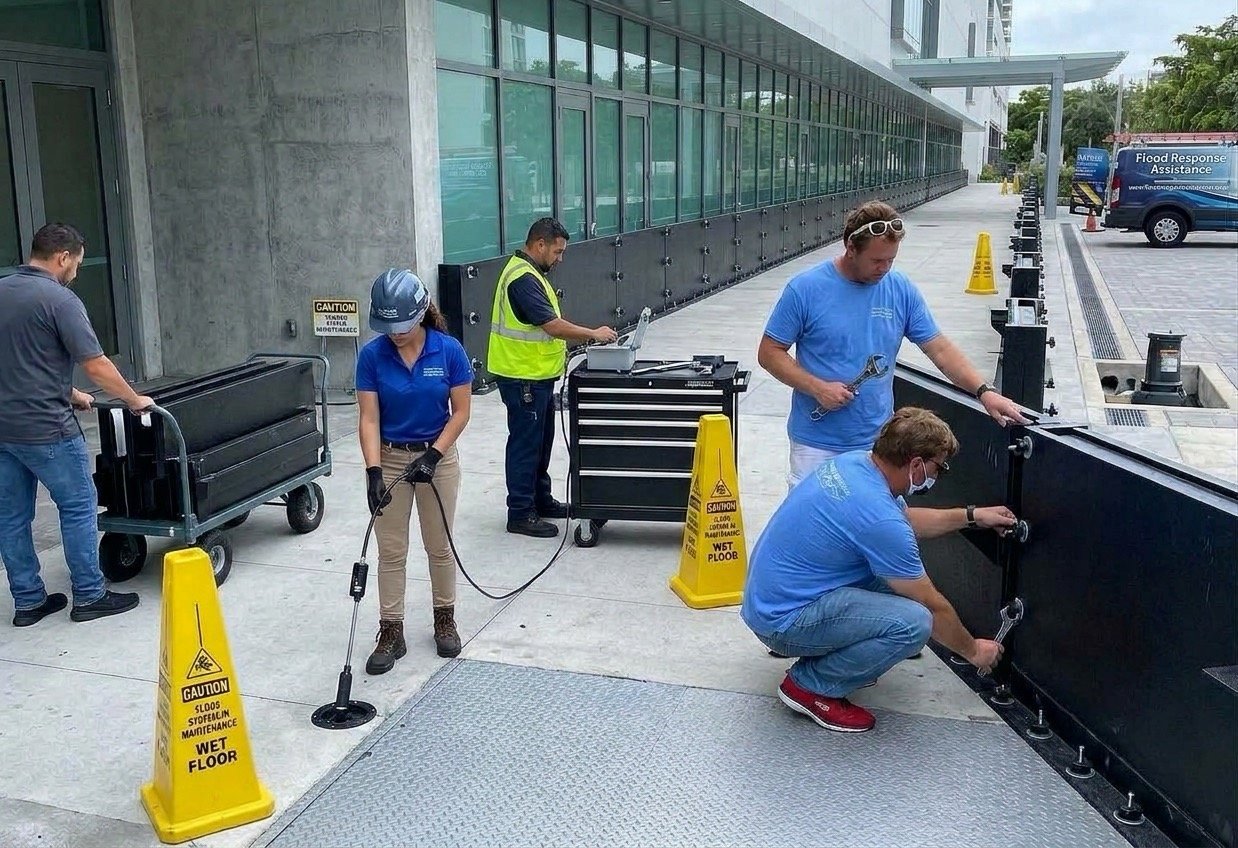
- Run a dry-fit drill – A practice deployment in calm weather shows you exactly where the plan breaks: the missing wrench, the panel that sticks, the door nobody has a key for. It’s far better to find those surprises on a sunny Tuesday than during a hurricane warning.
- Review what changed on site – New landscaping, a repaved entrance, a relocated generator, or a tenant improvement can all affect how and where your barriers install. If the property changed, the plan should too.
- Train the next shift – Make sure more than one person, on more than one shift, knows how to deploy the system.
A Quiet Hurricane Season Doesn’t Equal a Quiet Flooding Season
If 2026 taught us anything, it’s this: hurricane season has an end date, and flood risk doesn’t follow it.
Four quiet months made it easy to assume the season was a non-event. Isaias arrived in October anyway, and its flooding didn’t stay on the coast. Heavy rain and flash flooding spread well inland across the Panhandle, southern Alabama, and southwest Georgia.
And that’s only the tropical side of the risk:
- Winter nor’easters push storm surge into coastal properties
- King tides cause sunny-day flooding in low-lying areas
- Heavy rain overwhelms stormwater systems in any month
In much of the country, spring snowmelt and river flooding arrive long before the next hurricane season begins. Tropical systems don’t always respect the official dates either. Storms can form before June 1 or after November 30.
That’s the real case for off-season flood system maintenance. Your system needs to be ready whenever water shows up, not just when the forecast says it’s hurricane season. A system that’s clean, inspected, stored correctly, and backed by a current plan is ready in any month.
Flood System Maintenance FAQs
How often should a flood barrier system be maintained?
At minimum, once a year with a full inspection, plus a quick check after every deployment or test. The end of hurricane season is a natural time for the annual review. Always follow your manufacturer’s specific maintenance guidance.
We deployed our barriers for Hurricane Isaias. What should we check first?
Start with the seals, tracks for compression systems, and hardware. Storm surge and floodwater carry sand, silt, salt, and debris that lodge in gaskets and embedded channels. Clean and dry everything before storage, replace any compressed or damaged gaskets, and count your hardware, since post-storm takedowns are when parts go missing. Then debrief the deployment with your team while the details are still fresh.
What’s the most common reason a flood barrier fails?
In many cases, it’s not the barrier. It’s a worn seal, missing hardware, a blocked track, or a team that doesn’t know the deployment steps. Most of those are preventable with routine maintenance and practice.
Can my facilities team handle maintenance in-house?
Often, yes, for routine cleaning, inspection, and inventory. A professional service visit is worth it for a detailed system inspection, gasket replacement, deployment training, and updating a plan after site changes.
Do I need to test-deploy my system every year?
We strongly recommend it. A dry-fit drill is the only way to confirm that your equipment, your plan, and your people all work together.
Keep Your Flood Readiness Up as the Season Winds Down
You don’t have to keep your guard up 365 days a year. You just need a system that’s ready when you need it. Isaias was a reminder that “when you need it” can be October, after months of calm, with less than three days’ notice. A few hours of focused maintenance in the off-season is how you get there.
Flood Response Assistance helps commercial properties plan, deploy, respond, and maintain their flood protection systems. If you’d rather hand off the post-season inspection, gasket replacements, team training, or a deployment plan refresh, we can take it from here.
Schedule your post-season flood system maintenance with Flood Response Assistance.