 +1 (561) 644-3311
 info@floodresponseassistance.com

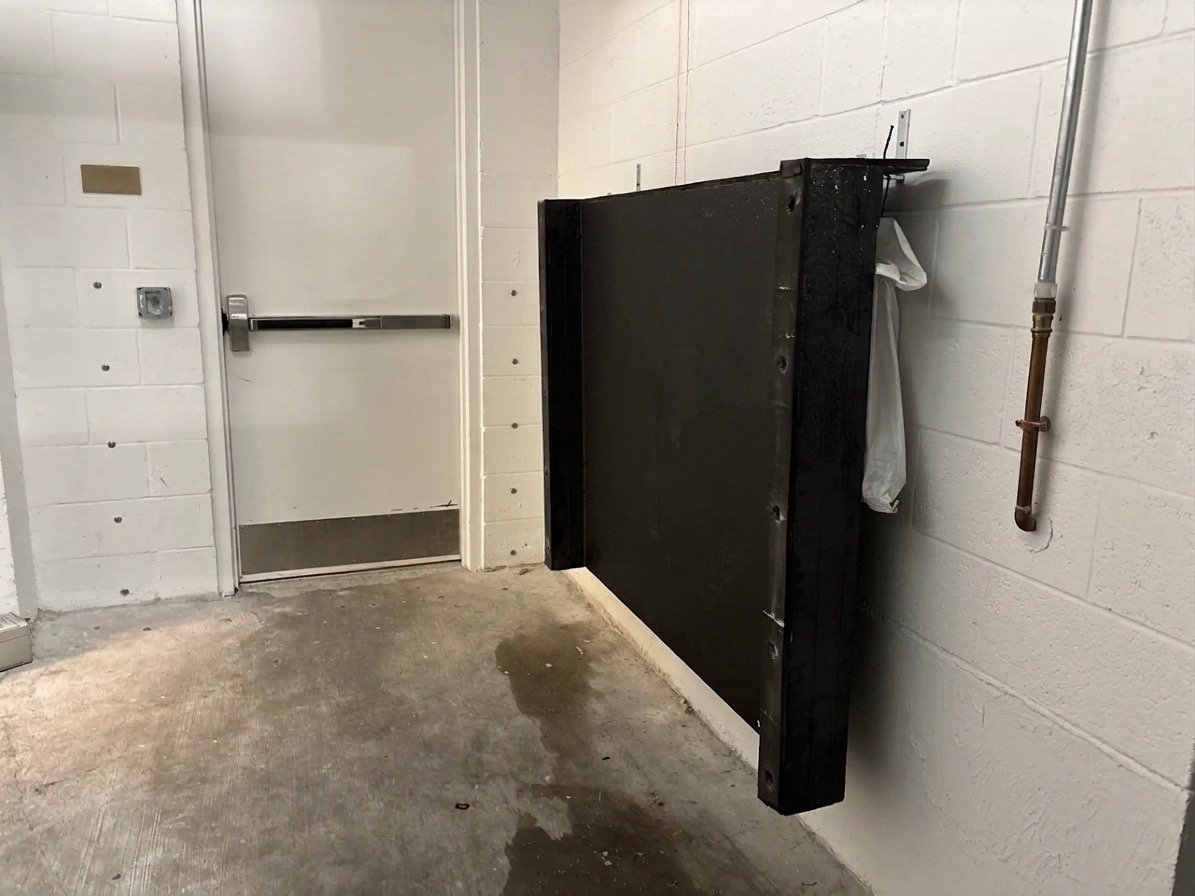
Flood Barrier Storage Nearby: Where to Keep Your Flood Panels
One of the most common questions we hear after a flood protection system is installed isn’t about the barriers themselves. It’s this: where do we actually put them?
It’s a fair question. Flood panels, posts, and hardware take up real space. They spend most of the year doing nothing. And the corner of the warehouse that seemed perfect on install day has a way of filling up with everything else by the time a storm is on the forecast.
But where you store your barriers decides how fast you can deploy them. Storms can go from a name on a forecast map to landfall in a matter of days, sometimes less. A barrier that’s 40 minutes away, locked behind someone else’s key, or buried under pallets is a barrier you may not get up in time.
This guide covers how to choose flood barrier storage nearby, the trade-offs between on-site and off-site options, and how to set up a storage spot your team can rely on.
Why Flood Storage “Nearby” Matters
Most flood protection plans focus on the barrier: how high it goes, how well it seals, how long it takes to install. Storage is often an afterthought. It shouldn’t be, because storage controls three things:
- Deployment Time – Your real deployment time isn’t just install time. It’s install time plus retrieval time, which means finding the panels, loading them, moving them, and staging them at each opening. The farther away your barriers live, the bigger that second number gets.
- Access Under Pressure – Right before a storm, roads back up, staff are stretched thin, and conditions deteriorate fast. Storage that’s easy to reach on a calm Tuesday can be hard to reach when everyone is leaving at once.
- Condition – Barriers stored in the wrong environment, such as hot, wet, cramped, or exposed, degrade faster. A gasket that’s been baking in a metal container all summer may not seal when you need it to.
The goal is a storage spot that’s close enough to deploy quickly and good enough to keep your system in working condition.
On-Site vs. Off-Site Flood Barrier Storage
There’s no single right answer. The best choice depends on your property, your space, and how much lead time your plan allows.
On-site flood barrier storage nearby
For most commercial properties, on-site storage is the gold standard. If you have the space, keep your barriers on the property they protect.
- The upside: Retrieval time is minimal. Your team doesn’t have to drive anywhere, and you avoid the risk of road closures or traffic cutting you off from your own equipment.
- The trade-off: Space. Panels need to be stored flat or upright on proper racking, not leaned against a wall where they can warp. That takes a dedicated footprint, and in a busy facility, dedicated footprints tend to get borrowed.
- Make it work: Store barriers near the openings they protect whenever possible. Panels for the loading dock should live near the loading dock, not across the building. If you have multiple protected openings, consider splitting storage so each set is close to where it deploys.
Off-site flood barrier storage nearby
When on-site space truly isn’t available, nearby off-site storage can work. Examples include a storage unit, a sister property, or a partner facility.
- The upside: It frees up space on your property while keeping the equipment within reach.
- The trade-off: Every mile adds retrieval time, plus a new set of things that can go wrong: a locked gate, a lost key code, a flooded access road, or a truck that isn’t available when you need it.
- Make it work: Keep it as close as possible. Pick a location that’s on higher ground than your property and that you can reach without driving through flood-prone streets. Confirm you’ll have access 24/7, including on weekends and holidays. Make sure you have a vehicle large enough to move the full system in as few trips as possible.
A good rule of thumb: if you can’t get your barriers from storage to their deployment points well within your plan’s lead time, the storage location is too far.
What Makes a Good Floor Barrier Storage Spot?
Whether your storage is on-site or down the road, look for these qualities:
- Cool, dry, and shaded – Heat, UV exposure, and moisture are hard on seals and gaskets. Avoid direct sunlight and spaces that trap heat, like unventilated metal containers. Always dry your barriers completely before storing them.
- Clear access – The path from storage to each deployment point should be wide enough and clear enough to move panels quickly. If you need a forklift or a dolly, make sure it’s available and that it can actually reach the storage area.
- Secure, but not too secure – Barriers should be protected from theft and tampering, but more than one person on more than one shift needs to be able to get in. If only one person has the key or code, your plan has a single point of failure.
- Labeled and organized – Number every panel and mark where it goes. Keep the hardware with the panels it belongs to, in labeled bins. When the pressure’s on, nobody should be guessing which post goes where.
Common Flood Barrier Storage Mistakes
We see these often enough that they’re worth naming.
- Storing barriers wherever there’s room – The space that’s free today is rarely the best place for deployment. Choose storage based on retrieval, not convenience.
- Separating panels from their hardware – Panels in one building and clamps in another is a guaranteed delay. Keep complete sets together.
- Letting storage get buried – Over time, other equipment migrates in front of the barriers. Mark the area as reserved and check it regularly.
- Storing them wet – Barriers that go back into storage damp after a test or deployment are prone to mold, corrosion, and gasket damage.
- Forgetting to update the plan – If you move the barriers, update the deployment plan. A plan that points to an old storage location costs you time when you can least afford it.
Make Storage Part of Your Deployment Plan
Your storage location shouldn’t live only in someone’s memory. Write it into your flood response plan, including:
- Where each set of barriers is stored
- How to access the storage (keys, codes, and who has them)
- What equipment is needed to move the panels
- How long retrieval takes, measured, not guessed
- Who is responsible for retrieval on each shift
Then test it. A dry-fit drill that starts at the storage location rather than with the panels already staged gives you a realistic picture of your true deployment time. If retrieval takes longer than expected, you’ll want to know now, not when the forecast turns.
Flood Barrier Storage Nearby FAQs
Where is the best place to store flood barriers?
On-site, as close as possible to the openings they protect, in a cool, dry, shaded area above flood level. If on-site space isn’t available, use nearby off-site storage that you can reach quickly and safely, with 24/7 access. We can provide mobile storage units that fit in a single parking stall.
How far away can flood barrier storage be?
It depends on your plan’s lead time, but closer is always better. Measure the full retrieval time, including loading, travel, and staging, and make sure it fits comfortably within the time you’ll realistically have before a storm.
Can flood panels be stored outdoors?
It’s generally not recommended. Sun, heat, and moisture can damage seals and other components over time. If outdoor storage is your only option, check with your manufacturer about protective covers and suitable conditions.
Should flood barriers be cleaned before storage?
Yes. Rinse off salt, silt, and debris with fresh water and mild soap, then let everything dry completely. Storing barriers dirty or damp shortens their life and can cause seal failures.
How often should we check on stored flood barriers?
Do a quick visual check a few times a year to confirm the barriers are accessible, organized, and in good condition. Do a full inspection at least once a year, and after any deployment or test.
Flood Response Assistance helps commercial properties plan, deploy, respond, and maintain their flood protection systems. That includes choosing the right storage location, working retrieval into your deployment plan, and running drills that test your real deployment time from storage to seal.
Talk to Flood Response Assistance about making your flood barriers easier to store and faster to deploy.