 +1 (561) 644-3311
  info@floodresponseassistance.com

What Is a Site-Specific Flood Risk Assessment?
Ask most commercial property owners about their flood risk and you’ll hear one of two answers: “We’re in a flood zone” or “We’re not in a flood zone.” Both answers describe a map, but the issue is that neither describes a building.
A site-specific flood risk assessment closes that gap. Instead of telling you which shaded polygon your property falls inside, it tells you how water would actually behave at your address, including where it would enter, how deep it would get, what it would destroy first, and exactly what it would take to stop it.
For facility managers and property owners, it’s the difference between knowing you have a risk and knowing what to do about it.
FEMA Flood Maps: Useful, But Not the Whole Picture
FEMA’s Flood Insurance Rate Maps (FIRMs) serve an important purpose. They determine flood insurance requirements, set floodplain construction standards, and give communities a shared baseline for risk.
But flood maps have well-known limits when applied to an individual commercial property:
- A flood zone boundary can run through a parking lot – The map doesn’t know your loading dock sits two feet lower than your front entrance.
- Many are based on aging data – Development, drainage changes, and evolving rainfall patterns can outpace map revisions, which is part of why a significant share of flood losses historically occur outside mapped high-risk zones.
- They model riverine and coastal flooding best – Localized urban flash flooding (a downpour overwhelming the storm drains on your block) often doesn’t appear on the map at all.
- They tell you probability, not consequence – A “1% annual chance” zone designation says nothing about whether one inch of water at your site becomes a cleanup job or a six-figure loss.
A flood map is where a risk conversation starts. A site-specific flood risk assessment is where it becomes a plan.
What a Site-Specific Flood Risk Assessment Includes
While every property is different, a thorough commercial assessment evaluates your site across several dimensions:
1. Site elevation and topography – How your building’s elevations relate to surrounding grade, streets, and nearby water sources – and where water would pool, flow, and accumulate on your property. Low points matter more than averages: water finds the lowest opening, not the typical one.
2. Flood exposure analysis – Which flood threat actually presents at your site: riverine overflow, coastal surge, tidal flooding, stormwater/flash flooding, or groundwater rise. Each behaves differently – different warning times, different durations, different water characteristics – and each calls for a different protection strategy. This analysis draws on FEMA data, historical flood records for the area, and local drainage conditions.
3. Building vulnerability survey – A walk-through of your structure to identify every point where water can enter:
- Doorways, storefronts, and emergency exits
- Loading docks and roll-up doors
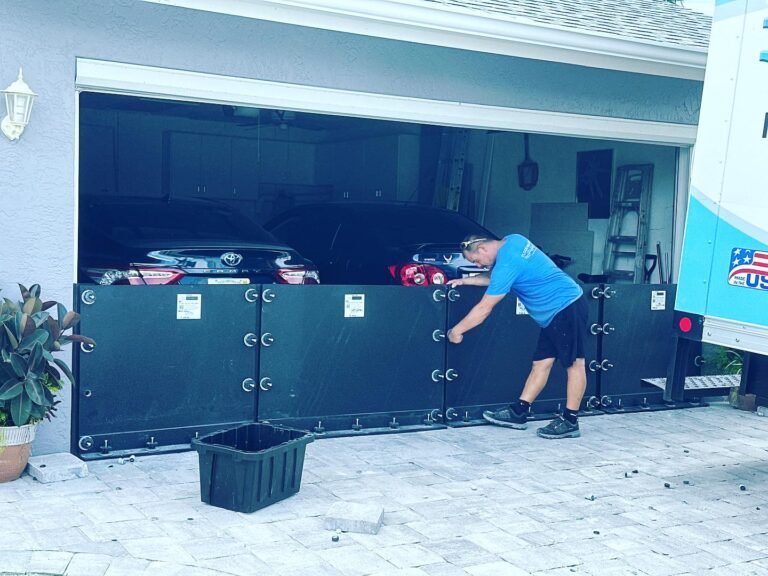
- Garage and basement entrances
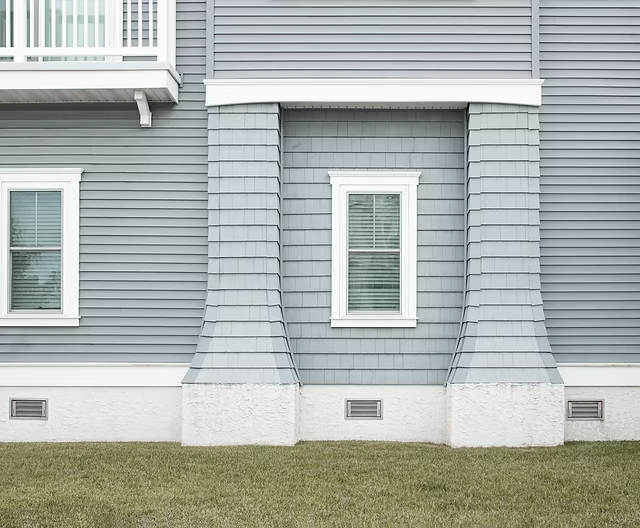
- Vents, utility penetrations, and conduit runs
- Floor drains and plumbing backflow paths
Each opening is measured and documented, because barrier protection is only as strong as its most overlooked gap.
4. Critical asset and consequence review – What’s actually at stake at ground level and below: electrical rooms, server and telecom equipment, HVAC and elevator machinery, inventory, records, and vehicle areas. This is where flood depth converts into dollars – and where relocation of key assets can sometimes reduce risk before a single barrier is purchased.
5. Operational readiness evaluation – Who would respond, how fast, and with what. Warning time available for your flood type, staffing during nights and weekends, and whether your team can realistically deploy protection in the window available. This conversation with this focuses on whether a professional deployment service should be part of the plan or if passive automatic flood protection would make more sense.
What You Walk Away With
The deliverable of a site-specific flood risk assessment is a protection roadmap. At the end of an assessment, you should have more clarity and confidence knowing what exactly you need to protect on your property.
- A prioritized vulnerability list – every entry point, ranked by likelihood and consequence.
- Specific protection recommendations – which openings need deployable barriers, which call for passive protection, where flood vents are appropriate, and what can be addressed through drainage or asset relocation.
- A deployment plan – who does what, in what order, triggered by what warning
- Documentation you can use – for insurance conversations, capital planning, and demonstrating due diligence to stakeholders, boards, and lenders
Who Needs One?
A site-specific flood risk assessment makes sense for any commercial property owner or facility manager who:
- Operates in or near a mapped flood zone or has experienced flooding despite being outside one
- Manages ground-floor assets that would be expensive or impossible to replace
- Is evaluating flood barriers but doesn’t know which openings to protect or what specification is required
- Needs to document flood preparedness for insurers, lenders, or corporate risk management
- Has a flood plan on paper but no confidence it would work at 2 a.m. on a holiday weekend
It’s also the logical first step before purchasing protection. Buying flood barriers without an assessment is like buying a suit without measurements – you might get lucky, but the water won’t grade on effort.
From Assessment to Action
An assessment is only valuable if it leads somewhere. At Flood Response Assistance, ours connects directly to execution:
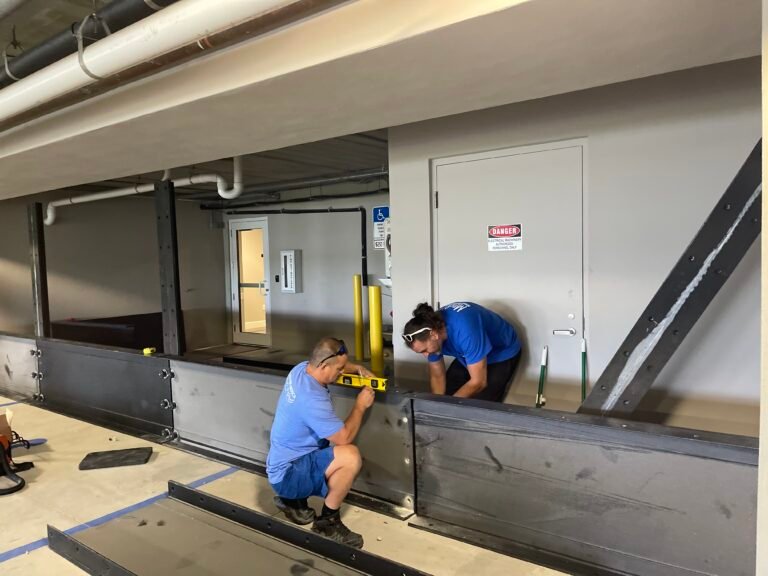
- Flood barrier specification and protection planning based on your documented entry points
- Flood vent installation where passive mitigation fits the structure
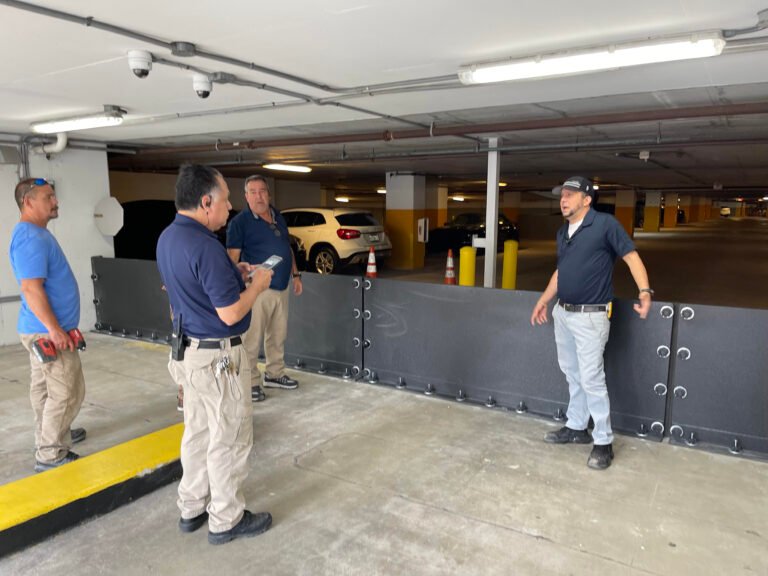
- Mock deployment training so your team can execute the plan
- 24/7 emergency deployment for properties that want a professional response team on call when flooding threatens
Your flood zone is a fact, but you have a choice in what your flood outcome will be, and it starts with understanding exactly how water would meet your building.
Contact Flood Response Assistance today to schedule a site-specific flood risk assessment for your commercial property.